
This article is for educational purposes only and is not personal financial advice. For decisions involving debt, investing, or taxes, consult a qualified financial professional. This guide explains how to budget on a biweekly paycheck without running out of money.
Learning how to budget on a biweekly paycheck without running out of money starts with one simple shift: stop budgeting by the month and start budgeting by the paycheck. A monthly budget looks neat on paper, but your money does not arrive once a month. It arrives every two weeks, and in most months that means two paychecks, not four neat weekly amounts and not one monthly lump sum.
That timing gap is why so many careful people still run short in the second week. Rent, a car payment, or a large grocery shop can land just before payday, while the next paycheck still feels far away. The fix is not to earn more overnight or to cut every small pleasure from your life. It is to give each paycheck a clear job before you spend it, to hold money for bills that are not due yet, and to treat a third paycheck as a bonus rather than as money you need to survive.
Why Biweekly Pay Feels Harder Than Monthly Pay
Biweekly pay means 26 paychecks a year. Most months bring two paychecks, but twice a year you get three. That sounds like extra money, and in a three-paycheck month it is. The trouble is that monthly bills do not split neatly into two equal halves every time. Some months have five weeks of groceries, fuel, and everyday spending, while the paycheck dates stay the same.
A second problem is timing. If rent is due on the 1st and your paycheck lands on the 3rd, you need money left over from the previous paycheck. Without a plan, that gap turns into a credit card charge, an overdraft fee, or a stressful scramble. With a plan, it is just a transfer you already made. That is the difference a paycheck-first budget makes.
How to Budget on a Biweekly Paycheck Without Running Out of Money, Step by Step
Start with your take-home pay, not your gross salary. If $1,400 lands in your account every two weeks, that is the number you plan from. Taxes, retirement contributions, and other deductions have already been taken out, so budgeting from gross pay will always leave you short. Check your last two pay slips and use the smaller amount if your hours vary. A plan built on a lower, realistic number is far easier to keep.
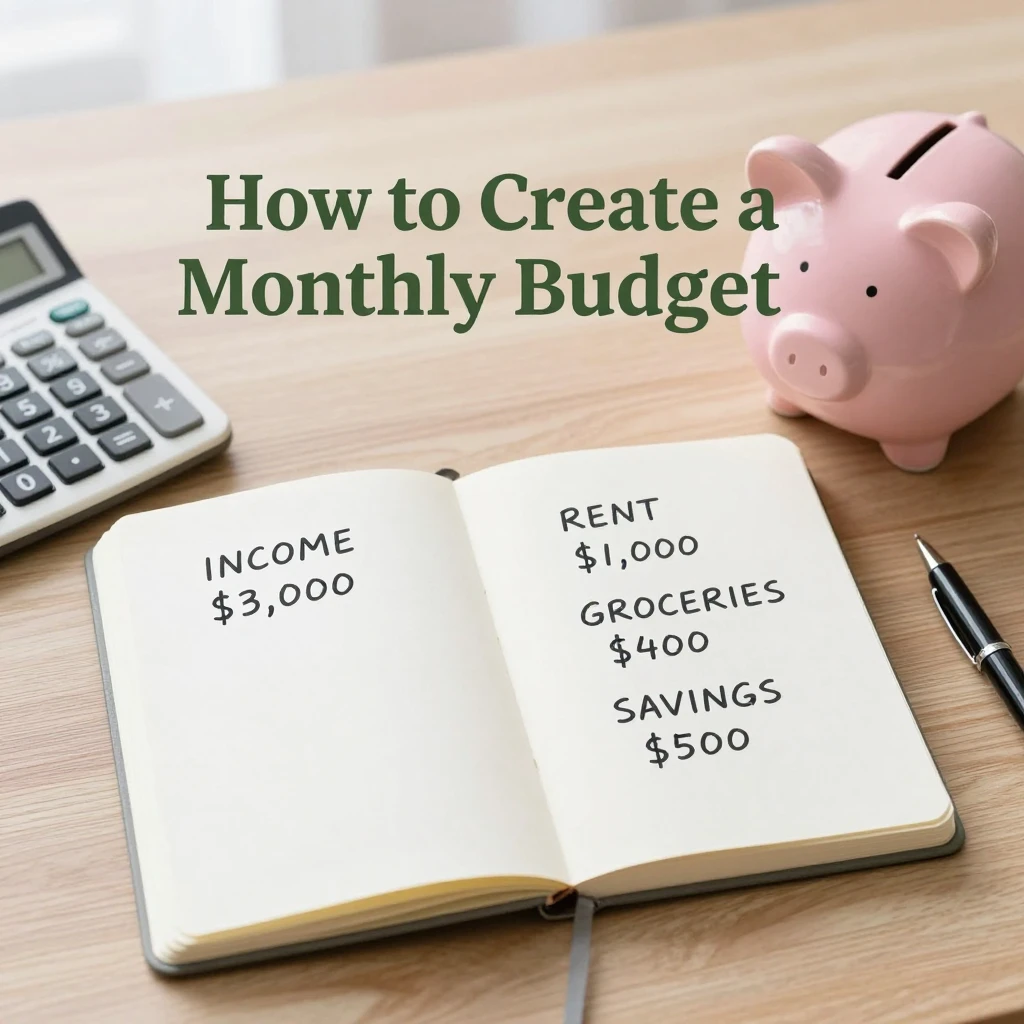
Next, list every fixed bill and its due date. Rent, utilities, a car payment, insurance, a phone bill, and minimum debt payments belong here. Then add the costs that repeat but vary, such as groceries, fuel, and household items. Finally, add savings and a realistic amount for fun. If you have never set out a full plan before, our guide on How to Create a Monthly Budget walks through the same steps in more detail, and you can adapt its monthly totals to a two-paycheck rhythm.
Now split each monthly bill in half and set aside that half from each paycheck. For example, a $900 rent payment becomes $450 from each paycheck, and a $150 utility bill becomes $75 from each paycheck. Keep that bill money in a separate checking account, or at least in a clearly labelled sub-account, until it is due. This one habit solves the timing problem, because the rent money is waiting before rent day arrives.
Write the plan down before payday, not after it. A notebook, a spreadsheet, or a simple budget planner all work, and the best one is the one you will actually open every two weeks. If you like a paper system, the Clever Fox Budget Planner gives you a page for each paycheck, with space for bills, spending, and savings, so the plan stays visible instead of living only in your head. Keep the system simple at first. You can refine it later, once the habit is steady.
Automate Money on Payday, Before You Can Spend It
The most reliable way to stop running out of money is to move money on payday, before spending starts. Set an automatic transfer for the same day your paycheck lands, so savings leave your main account while the balance still looks healthy. Even $100 or $150 per paycheck builds a cushion over time, and automation removes the weekly decision about whether to save this time.
Start with two automatic moves. First, send your chosen savings amount to a separate savings account. Second, move your bill money to the account you use for bills, or keep it clearly separated if you use one account. What remains is the money you can actually spend for the next two weeks, and that clarity makes everyday choices easier. If you want a fuller system for automating your money on payday, the book I Will Teach You to Be Rich explains automatic transfers, accounts, and a conscious spending plan in plain language.
Watch the full book summary on our YouTube channel
Build a Small Buffer Before You Try to Be Perfect
A biweekly budget works best when a small buffer sits between you and the next payday. Aim first for $250 to $500 set aside for timing gaps, not for a perfect emergency fund. That buffer covers a bill that arrives early or a grocery week that runs long, without forcing you to borrow. Once the buffer exists, keep building it.
Next, add sinking funds for costs you can see coming. A sinking fund is simply money saved a little at a time for a known future expense, such as car insurance, a phone replacement, school costs, or holiday spending. If car insurance costs $600 every six months, saving $50 from each biweekly paycheck covers it in full. Our guide on sinking funds explains how to set up these pots, and the habit turns many so-called emergencies into planned expenses. For true surprises, such as a broken appliance or a sudden loss of hours, an emergency fund is the next layer. Our Emergency Fund 101 guide explains how much to hold and how to build it step by step.
Use a simple split to keep savings realistic. The 50/30/20 Budget Rule is a useful starting point: about 50% for needs, 30% for wants, and 20% for savings and extra debt payments. On a tight biweekly income, a 60/20/20 split may fit better, with 60% for needs, 20% for wants, and 20% for savings and debt. The exact split matters less than the habit. Choose percentages you can keep for three months, then adjust them when your income or rent changes.
A Worked Example: How to Budget on a Biweekly Paycheck Without Running Out of Money on $1,400
Here is how the method works with real numbers. Suppose your take-home pay is $1,400 every two weeks. In a normal two-paycheck month, that gives you $2,800 to plan with. The split below uses half of each monthly bill from each paycheck, so both paychecks follow the same plan.
From each $1,400 paycheck, set aside $450 for rent, $75 for utilities, $60 for car insurance, and $30 for your phone. That is $615 for those fixed bills. Add $200 for groceries, $100 for fuel and transport, $100 for a minimum debt payment, and $20 for subscriptions. That brings the total to $1,035. Then move $150 to savings, split between an emergency fund and sinking funds, and keep $215 as spending money for meals out, clothes, and small pleasures. Add it up: $615 plus $420 plus $150 plus $215 equals $1,400.
The second paycheck in the month follows the same split, even though the bills due that fortnight may differ. The rent portion from the second paycheck waits for next month’s rent, and the insurance portion waits for its due date. This is the key point. You are not spending the second paycheck twice. You are funding each bill a little at a time, so no single due date can empty your account.
Now look at a three-paycheck month. That extra $1,400 is not part of your normal $2,800 monthly plan, so do not build regular bills around it. Instead, give it a job in advance. A strong split is $700 to your emergency fund or a sinking fund, $400 as an extra debt payment, and $300 for guilt-free spending, such as a holiday fund or a small treat you have been delaying. That way the third paycheck speeds up your goals without creating a higher monthly lifestyle that the next two-paycheck month cannot support. Over a year, those two extra paychecks add $2,800, which can clear debt, fund a full emergency cushion, or cover a large annual cost.
How to Budget on a Biweekly Paycheck Without Running Out of Money With a Weekly Check
A biweekly budget only works if you check it. Set aside ten minutes once a week, on the same day, to look at your balances and your remaining spending money. Ask three questions: What bills are due before the next paycheck? How much spending money is left? Is anything about to go over budget? Small weekly checks catch problems while they are still small.
If spending money runs out early, do not abandon the whole plan. Move a small amount from a flexible category, such as eating out, and note the change for next time. If you need a larger amount, look at the $3,000 salary example in our guide on How Much Should I Save From Each Paycheck on a $3,000 Salary, which shows how savings targets change as income changes, and scale its percentages to your own biweekly pay.
Three mistakes cause most biweekly budget failures. The first is budgeting from gross pay instead of take-home pay. The second is spending the third paycheck as if it were regular income. The third is leaving no spending money at all, which makes the plan feel like punishment and leads to a large blowout later. A plan you can keep for six months beats a perfect plan you abandon in two weeks.
Frequently Asked Questions
Set aside half of each monthly bill from every paycheck and hold it until it is due. That way the rent money is already waiting before rent day, even if your paycheck lands after the due date.
Give it a job before you spend it. For example, send $700 to savings, $400 as an extra debt payment, and $300 to guilt-free spending. Do not build regular monthly bills around it, because most months have only two paychecks.
Start with $100 to $150 per paycheck if that fits, and aim to build a $250 to $500 buffer first. A 20% savings share, such as $280 from a $1,400 paycheck, is a good longer-term target once bills are covered.
Conclusion
Learning how to budget on a biweekly paycheck without running out of money is less about strict rules and more about timing. Budget from take-home pay, split monthly bills across both paychecks, automate savings on payday, and keep a small buffer for the weeks when timing works against you. Treat a third paycheck as a boost for savings and debt, not as income you must spend.
Start with your next paycheck only. Write down its jobs before payday, move the bill money and savings first, and check the plan once a week. After two or three pay cycles, the system will feel normal, and the end of the pay period will feel calmer than it does today.