

Disclaimer: The information provided in this article is for educational and informational purposes only and should not be considered financial, investment, tax, or legal advice. Always do your own research or consult a professional before making financial decisions.
Introduction
If budgeting has always felt overwhelming — spreadsheets with fifty categories, apps that require tracking every single coffee purchase — you’re not alone. Most people give up on budgeting not because they lack discipline, but because their system is too complicated to stick with.
That’s exactly why the 50/30/20 budget rule has become one of the most popular money management methods out there. It simplifies your entire budget into just three categories, making it easy to set up in minutes and easy to stick with long-term.
In this guide, we’ll break down exactly what the 50/30/20 rule is, how to apply it to your income, a real example, and how to adjust it if your situation doesn’t fit the standard split.
What Is the 50/30/20 Budget Rule?

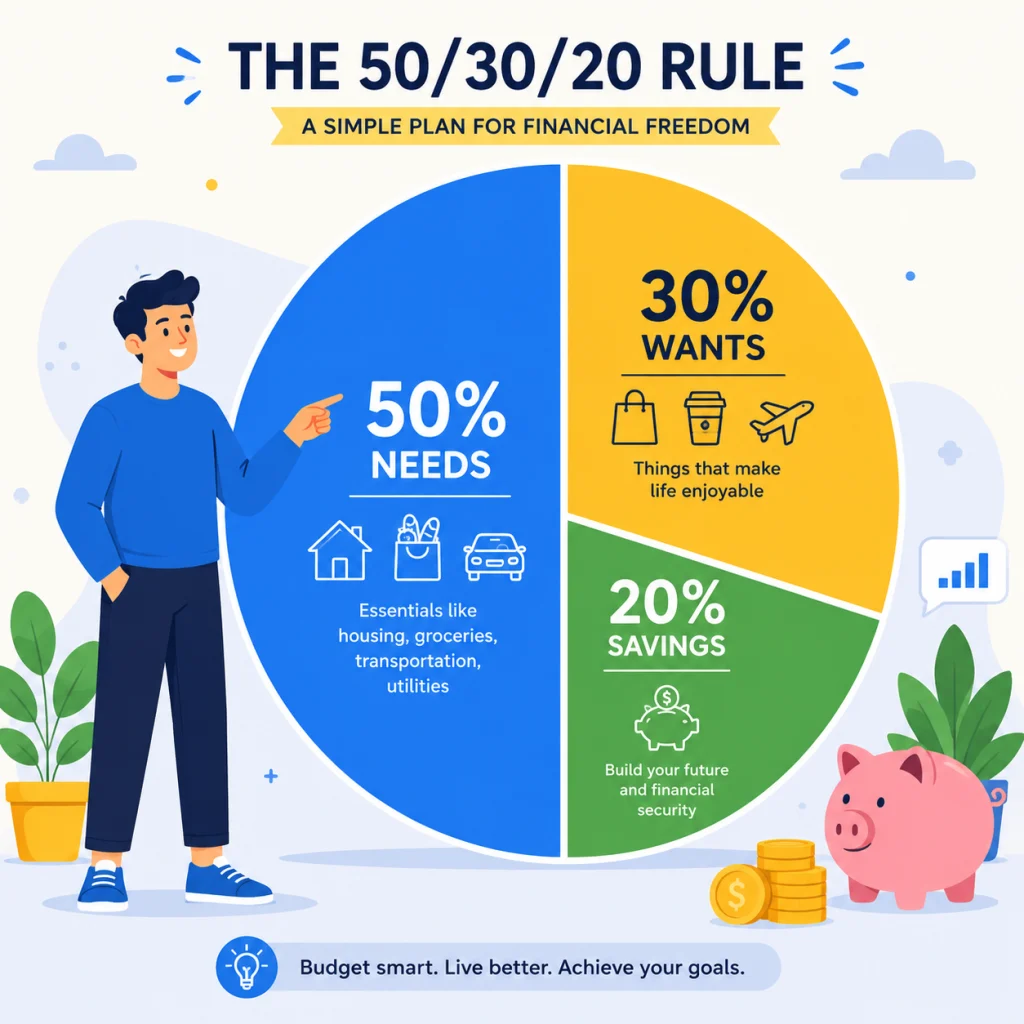
The 50/30/20 rule is a simple budgeting method that divides your after-tax (take-home) income into three broad categories:
- 50% for Needs — essential expenses you can’t avoid
- 30% for Wants — non-essential spending that improves your quality of life
- 20% for Savings & Debt Repayment — building your future financial security
The method was popularized by U.S. Senator Elizabeth Warren and her daughter Amelia Warren Tyagi in their book All Your Worth: The Ultimate Lifetime Money Plan. Its appeal lies in its simplicity — instead of tracking dozens of categories, you only need to manage three.
Breaking Down Each Category
50% – Needs

These are the expenses you must pay to live and work. If you skipped these payments, there would be real consequences.
Examples include:
- Rent or mortgage
- Utilities (electricity, water, gas)
- Groceries
- Minimum debt payments
- Insurance (health, auto, home)
- Transportation to work
- Childcare
30% – Wants

These are expenses that make life more enjoyable but aren’t strictly necessary for survival.
Examples include:
- Dining out
- Streaming subscriptions
- Hobbies
- Shopping for non-essential items
- Vacations
- Entertainment
20% – Savings & Debt Repayment

This category is about building your financial future — beyond the minimum payments already counted in “Needs.”
Examples include:
- Emergency fund contributions
- Retirement savings
- Extra debt payments (beyond the minimum)
- Sinking funds for future goals
- Investing
How to Apply the 50/30/20 Rule to Your Income

Step 1: Calculate Your After-Tax Income
Use your take-home pay — the amount that actually lands in your bank account after taxes and deductions, not your gross salary.
Step 2: Multiply by Each Percentage
Take your monthly after-tax income and multiply it by 0.50, 0.30, and 0.20 to get your three spending limits.
Step 3: Sort Your Existing Expenses
Go through your current spending and place each expense into one of the three buckets. This alone often reveals where your budget is out of balance.
Step 4: Adjust Where Needed
If your “Needs” are eating up more than 50%, look for ways to trim — meal planning to cut grocery costs, negotiating bills, or reassessing subscriptions counted as needs versus wants.
A Simple Example
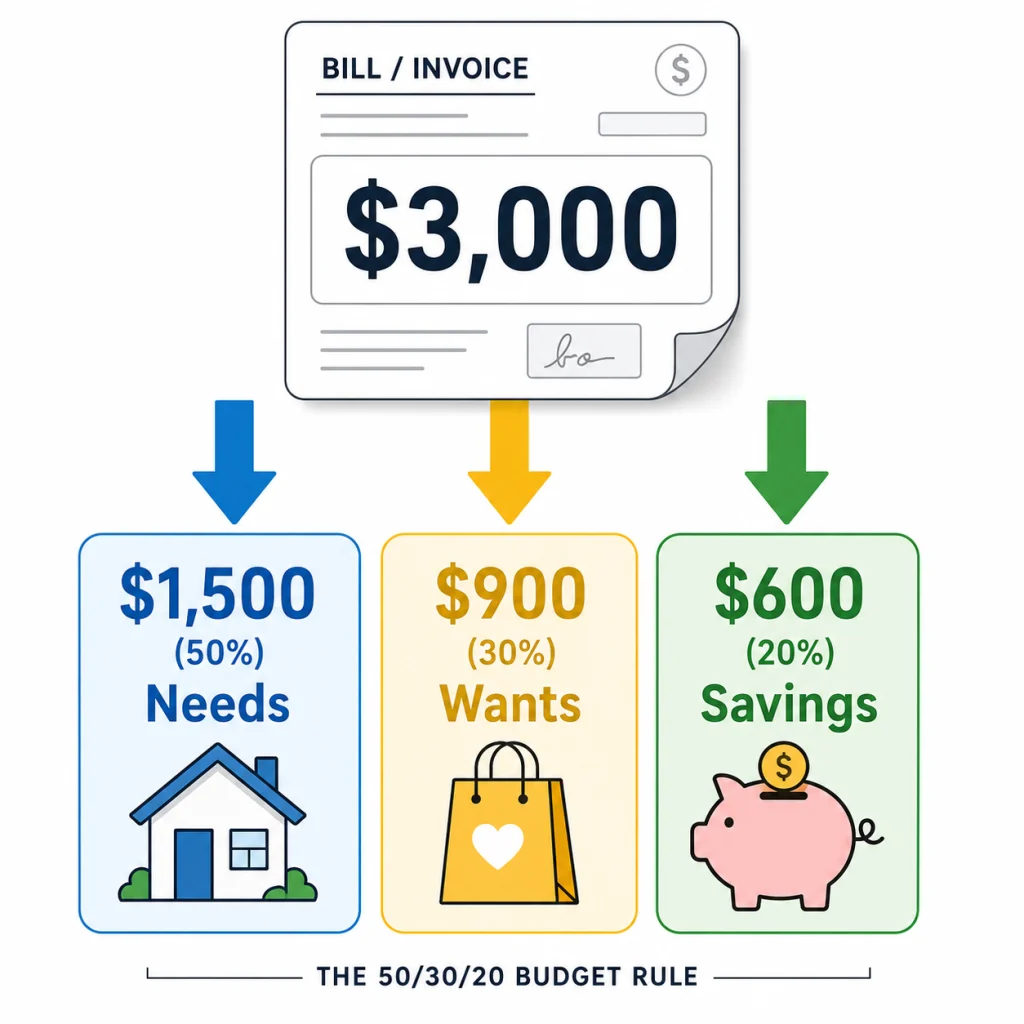
Let’s say your monthly after-tax income is $3,000.
| Category | Percentage | Amount |
|---|---|---|
| Needs | 50% | $1,500 |
| Wants | 30% | $900 |
| Savings & Debt | 20% | $600 |
With this breakdown, you know exactly how much you can spend on rent and groceries, how much room you have for fun spending, and how much should be going toward your savings or extra debt payments every single month.
What If the 50/30/20 Split Doesn’t Fit Your Situation?
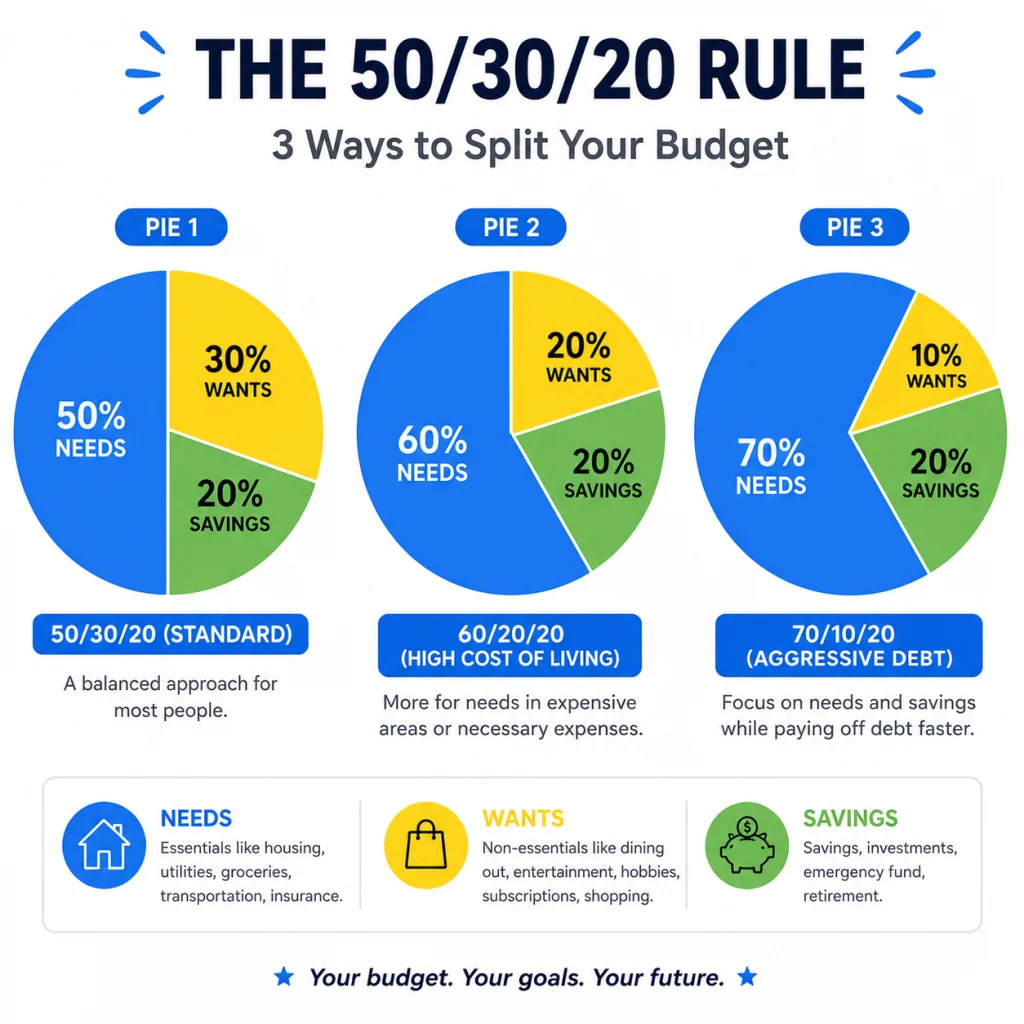
The 50/30/20 rule is a guideline, not a strict law. If you live in a high cost-of-living area, are aggressively paying off debt, or are on a lower income, the exact percentages may not work for you right away — and that’s okay.
Some common adjustments:
- High cost of living: Try a 60/20/20 or 70/20/10 split until your income grows or expenses decrease.
- Aggressive debt payoff: Shift more toward the “savings/debt” category, even if it means temporarily reducing “wants” to 10-15%.
- Irregular income: Base your percentages off your average monthly income over the past 3-6 months rather than a single paycheck.
The goal isn’t to hit the exact numbers perfectly — it’s to create a simple framework that keeps your spending balanced and your savings consistent.
Tips to Make the 50/30/20 Rule Work for You
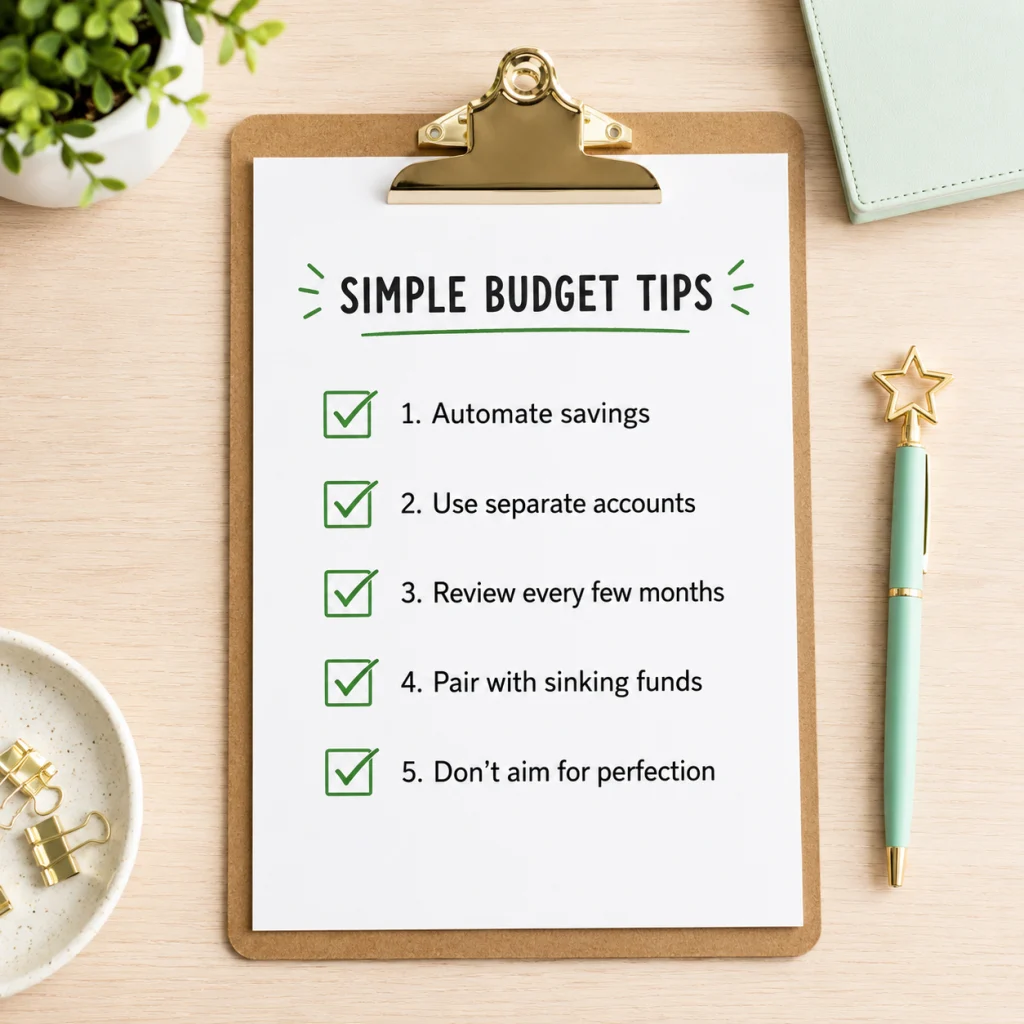
- Automate your savings so the 20% moves out of your checking account before you’re tempted to spend it.
- Use separate accounts or cash envelopes for each category to avoid overspending without needing to track every transaction.
- Revisit your percentages every few months, especially after a raise, a move, or a change in expenses.
- Pair it with sinking funds so irregular expenses like holidays or car maintenance don’t throw off your “Needs” category unexpectedly.
- Don’t aim for perfection in month one. It’s normal to need a few months to fine-tune your categories.
Final Thoughts
The 50/30/20 budget rule works because it removes the overwhelm from budgeting. Instead of tracking dozens of line items, you only need to manage three simple buckets — needs, wants, and savings. Whether you follow the split exactly or adjust it to fit your life, the real value is having a clear, simple framework that keeps your money moving in the right direction every single month.
If you’re just starting your budgeting journey, this is one of the easiest methods to begin with — and it pairs perfectly with tools like cash stuffing and sinking funds once you’re ready to take your money management to the next level.