
Disclaimer: The information provided in this article is for educational and informational purposes only and should not be considered financial, investment, tax, or legal advice. Always do your own research or consult a professional before making financial decisions.
Introduction
It usually starts with something ordinary. Your car breaks down on the way to work, your hours get cut, or a medical bill arrives that you did not expect. Life rarely gives you a warning before these moments, and without an emergency fund set aside, even a small emergency can quickly turn into serious debt.
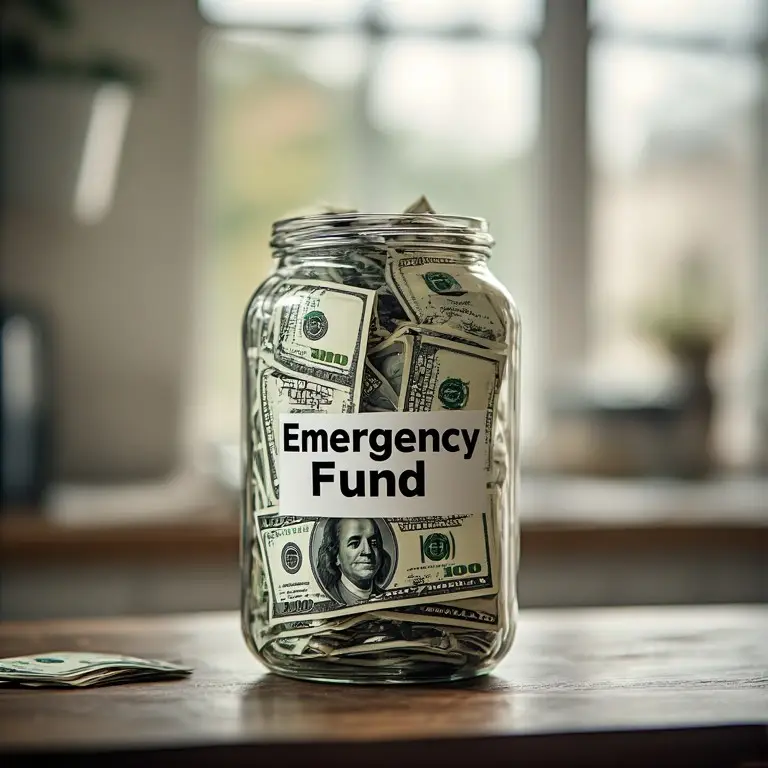
That is exactly what an emergency fund is for. It is not glamorous, and it will not make an exciting goal on a vision board, but it is arguably the single most important foundation of a healthy financial life. Without one, every unexpected expense feels like a crisis. With one, the same expense becomes an inconvenience you can actually handle.
In this guide, you will learn exactly what an emergency fund is, how much you really need, where to keep it, and how to build one step by step, even if you are starting from zero.
What Is an Emergency Fund?
An emergency fund is money set aside specifically for genuine, unexpected financial emergencies — not planned expenses, not “wants,” and not things you already knew were coming.
True emergencies typically include:
- Job loss or a significant income reduction
- Unexpected medical or dental expenses
- Urgent car repairs needed to get to work
- Essential home repairs (a broken water heater, a roof leak)
- Unexpected travel for a family emergency
What an emergency fund is not for: holiday shopping, a vacation, car registration, or your annual insurance bill. Those are predictable expenses — that’s exactly what a sinking fund is designed for. Keeping the two separate is what makes both systems actually work.
Why an Emergency Fund Matters So Much
- It keeps you out of debt. Without savings, a single emergency often gets charged to a credit card, creating a debt cycle that can take months or years to pay off.
- It protects your other financial goals. Without an emergency cushion, unexpected costs force you to pull from retirement savings, sinking funds, or other goals you’ve worked hard to build.
- It reduces financial anxiety. Knowing you can cover a surprise expense without panic brings a level of peace that’s hard to put a price on.
- It gives you real options. An emergency fund isn’t just about disasters — it also gives you breathing room to leave a bad job situation or make a necessary life change without financial fear holding you back.
How Much Should You Actually Save?
This is the question most people get stuck on — and the honest answer is: it depends on your situation. Here’s a simple framework to figure out your number.
Step 1: Start With a Starter Emergency Fund
If you are just getting started, do not worry about the ideal amount yet. Instead, focus first on a smaller starter goal, commonly recommended around $500–$1,000. This alone is often enough to cover most small emergencies without reaching for a credit card, and it builds momentum fast.
Step 2: Calculate Your Full Emergency Fund Goal
Once your starter fund is in place, work toward a fuller emergency fund based on your monthly essential expenses — rent/mortgage, utilities, groceries, insurance, minimum debt payments, and transportation. Add these up to get your true monthly “bare minimum” number.
Step 3: Multiply by Your Target Number of Months
| Your Situation | Recommended Coverage |
|---|---|
| Stable job, dual income household | 3 months of essential expenses |
| Average job stability, single income | 3–6 months of essential expenses |
| Freelancer, commission-based, or irregular income | 6–12 months of essential expenses |
| Sole provider for a family | 6+ months of essential expenses |
For example, if your essential monthly expenses total $2,500 and you’re aiming for 4 months of coverage, your full emergency fund goal would be $10,000.
There’s no single “correct” number — the right amount is the one that lets you sleep at night knowing you could handle a real disruption to your income.
Where Should You Keep Your Emergency Fund?
Your emergency fund should be:
- Easily accessible — you need to be able to get to it quickly in a real emergency
- Separate from your everyday spending account — so you’re not tempted to dip into it
- Safe from market risk — this is not the place for investing, since you may need the full amount at any time
In fact, a high-yield savings account is generally the most common choice, since it keeps your money liquid while still earning some interest — far more than a typical checking account. Keeping it in a separate account (even at a different bank than your everyday spending account) also adds a helpful mental barrier against casual spending.
How to Build Your Emergency Fund Fast
1. Set a Specific, Visible Goal
Whether it’s your $500 starter goal or your full 3-6 month target, write the number down and track your progress visually. Seeing progress builds motivation to keep going.
2. Automate Your Savings
Set up an automatic transfer to your emergency fund account right after payday, even if it’s a small amount. Treating it like a non-negotiable “bill to yourself” makes consistency far easier than relying on willpower alone.
3. Use a No-Spend Challenge to Jumpstart It
For example, a short-term no-spend challenge can free up a surprising amount of extra cash quickly, giving your emergency fund a fast head start.
4. Redirect Windfalls
Tax refunds, work bonuses, cash gifts, or rebate money are perfect candidates to drop straight into your emergency fund instead of your everyday spending.
5. Sell Unused Items
A garage clean-out or decluttering session can often generate a few hundred dollars — a great way to hit your starter goal faster.
6. Pick Up a Short-Term Side Hustle
In addition, a temporary side hustle focused specifically on emergency fund building can help you reach your goal in weeks instead of months.
What to Do When You Actually Use It
Using your emergency fund for a real emergency isn’t a failure — it’s exactly what it’s there for. The key is what happens next: pause other savings goals temporarily if needed, and prioritize refilling your emergency fund back to its target amount before resuming extra debt payments or other savings goals.
Final Thoughts
An emergency fund isn’t the most exciting financial goal, but it’s the one that makes every other goal possible. It’s the difference between a car repair being a stressful inconvenience or a full-blown financial crisis. Start small, automate what you can, and build steadily — because the best time to build an emergency fund is always before you need it.
Frequently Asked Questions
Start with a $500 to $1,000 starter goal, then build toward 3 to 6 months of essential expenses, or 6 to 12 months if your income is irregular.
Keep it in a separate high-yield savings account, away from your everyday spending, so you can reach it quickly without market risk.
Automate a transfer on payday, redirect windfalls like tax refunds, try a short no-spend challenge, and sell unused items to reach your goal faster.