
Disclaimer: The information provided in this article is for educational and informational purposes only and should not be considered financial, investment, tax, or legal advice. Always do your own research or consult a professional before making financial decisions.
Introduction

Ever get hit with a “surprise” expense that wasn’t really a surprise at all? Your car insurance renewal, your kid’s back-to-school shopping, that annual Amazon Prime charge, or your yearly dentist visit these all show up like clockwork, yet somehow they still throw your budget off every single time.
That’s exactly the problem a sinking fund solves.
Unlike an emergency fund, which is for true, unexpected emergencies, a sinking fund is for expenses you already know are coming. It’s one of the most underrated budgeting tools out there, and once you set one up, you’ll never have to scramble to cover a “surprise” bill again.
In this guide, we’ll cover what a sinking fund is, how it’s different from an emergency fund, how to set one up step-by-step, and a full list of sinking fund categories to get you started.
What Is a Sinking Fund?
A sinking fund is money you set aside gradually, a little at a time, for a specific expense you know is coming in the future. Instead of paying for a big cost all at once and feeling the financial pinch, you break it down into smaller, manageable amounts saved over weeks or months.

For example, instead of being caught off guard by a $600 car insurance bill every six months, you could save $100 a month into a “Car Insurance” sinking fund. When the bill arrives, the money is already there no stress, no credit card debt, no dipping into your emergency fund.
Sinking Fund vs. Emergency Fund: What’s the Difference?
These two terms get mixed up often, but they serve very different purposes.
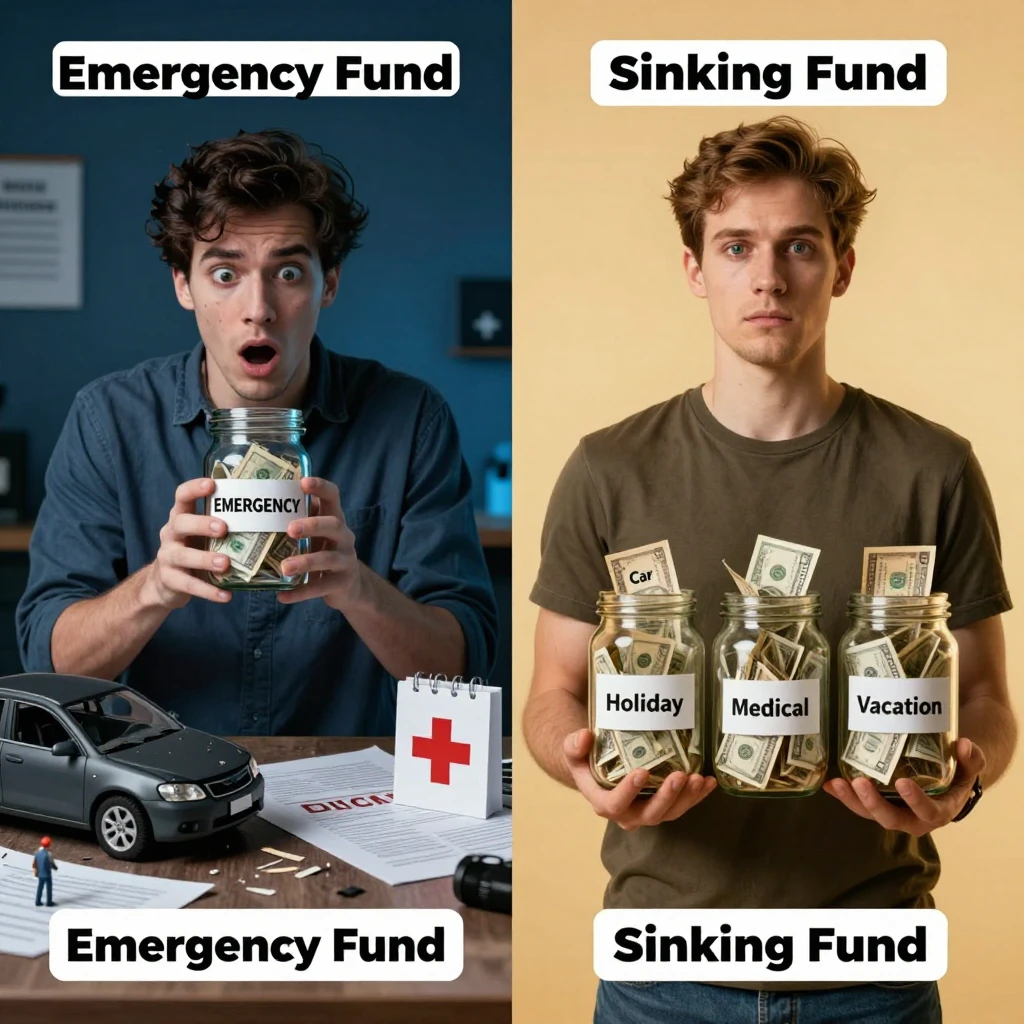
| Feature | Sinking Fund | Emergency Fund |
|---|---|---|
| Purpose | Planned, known future expenses | Unexpected emergencies |
| Examples | Car registration, holiday gifts, vacations | Job loss, medical emergency, major car repair |
| Predictability | Known amount and timing | Unknown amount and timing |
| Number of funds | Multiple, one per category | Usually just one |
Think of it this way: your emergency fund is your safety net for the unknown, while your sinking funds are your planning tool for the known. Having both working together is what creates real financial stability.
Why You Need a Sinking Fund

- It stops “surprise” expenses from becoming debt. Many people rely on credit cards for irregular expenses simply because they didn’t plan ahead. A sinking fund removes that temptation.
- It protects your emergency fund. Without sinking funds, people often raid their emergency savings for predictable costs like car maintenance or holiday shopping leaving them exposed when a real emergency hits.
- It reduces financial stress. Knowing the money is already set aside for that annual bill means one less thing to worry about.
- It works with any budgeting method. Sinking funds pair especially well with cash stuffing and envelope budgeting systems.
How to Set Up a Sinking Fund (Step-by-Step)
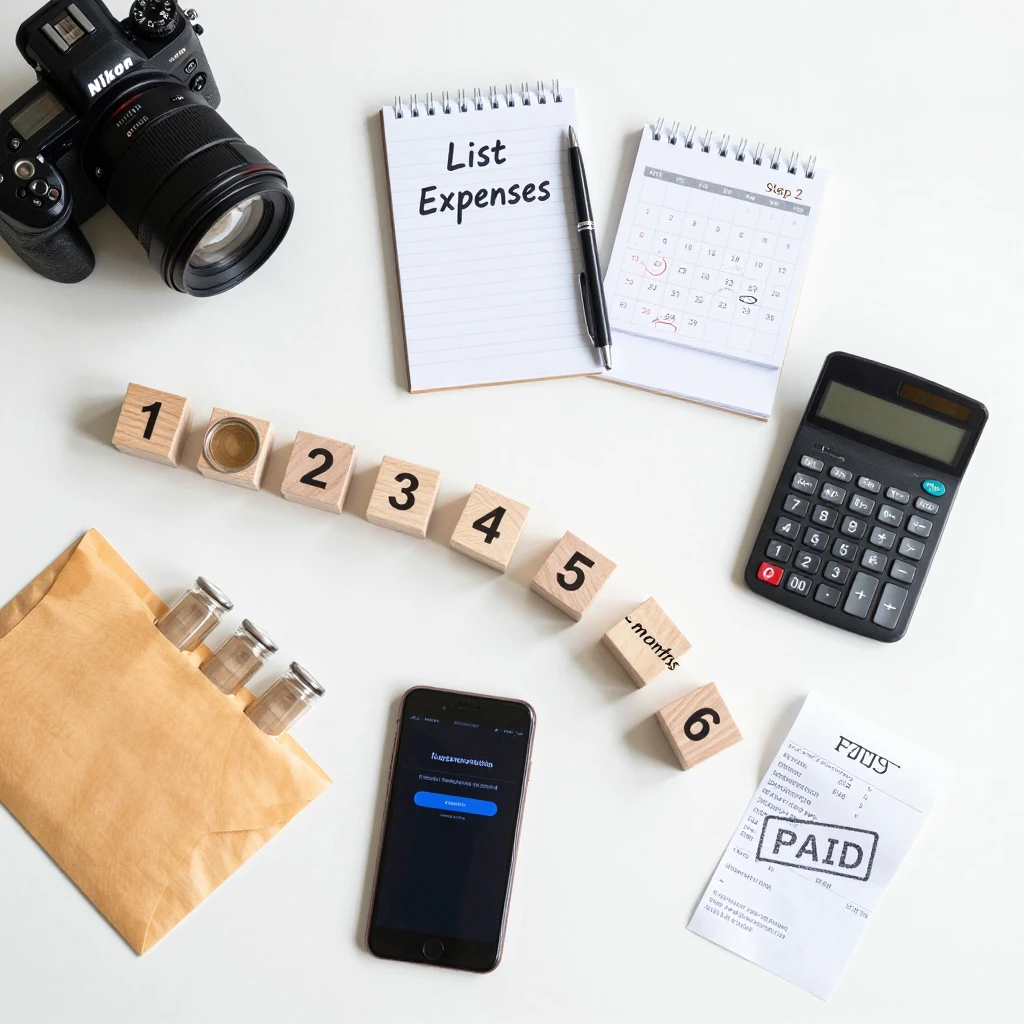
Step 1: List Your Irregular Expenses
Go through the past 12 months of spending (bank statements are great for this) and write down every expense that wasn’t monthly — things like car registration, holiday gifts, annual subscriptions, or vet visits.
Step 2: Estimate the Cost and Timing of Each
Next to each expense, write down roughly how much it costs and when it’s due. If you’re not sure, round up to be safe.
Step 3: Divide the Cost by the Months Until It’s Due
This tells you exactly how much to save each month. For example, if your $600 car insurance bill is due in 6 months, you need to save $100/month.
Step 4: Open Separate Savings “Buckets”
You can do this with cash envelopes, a spreadsheet, or a savings account that allows sub-accounts or “buckets” (many online banks offer this feature for free). The key is keeping each sinking fund separate so you always know how much you have for each category.
Step 5: Automate or Schedule Your Contributions
Set a recurring transfer or add it into your regular cash-stuffing routine so you don’t have to think about it every month it just happens.
Step 6: Use It (and Refill It)
When the expense comes due, pay it straight from the sinking fund. Once the bill is paid, that category resets to zero, and you start saving toward it again for next time.
Sinking Fund Categories List
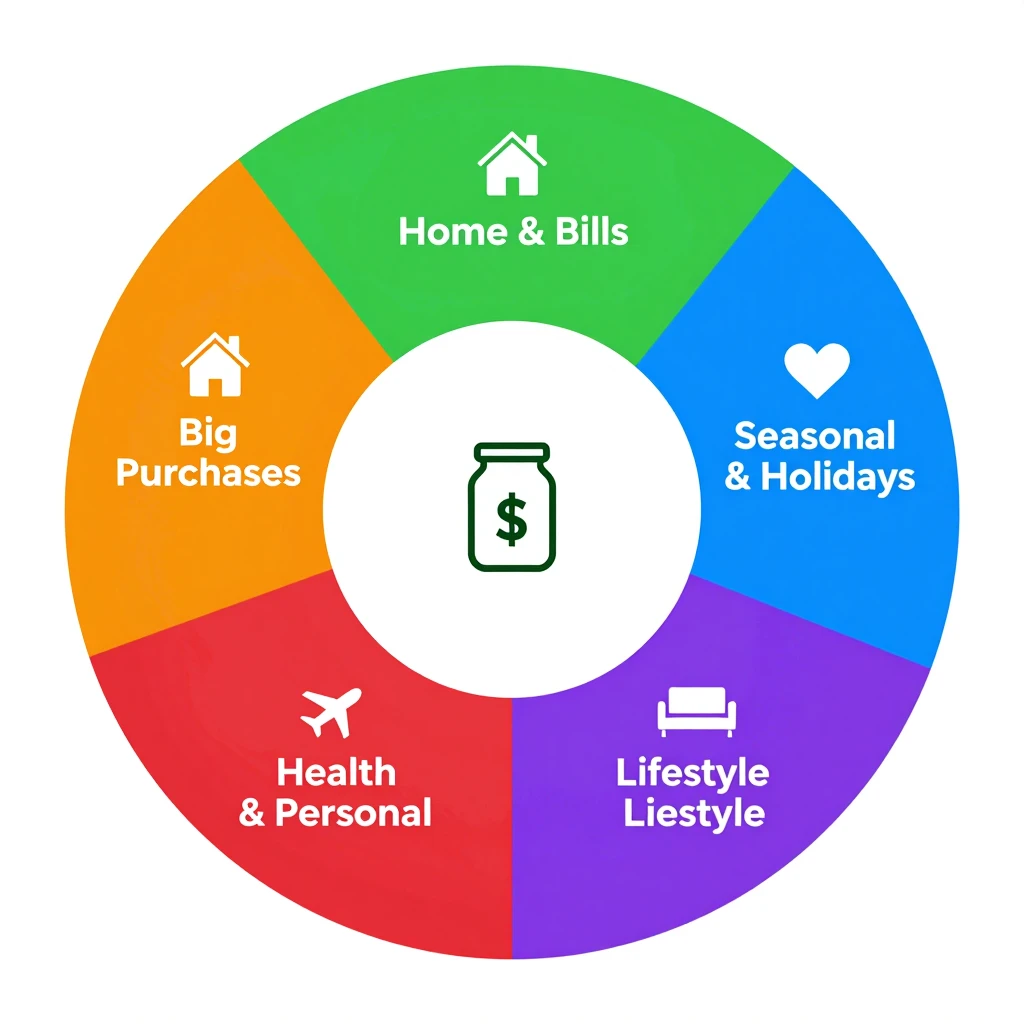
Not sure what categories to start with? Here’s a list of the most common sinking fund categories to help you get started:
Home & Bills
- Car registration/renewal
- Car insurance (if paid in a lump sum)
- Car maintenance and repairs
- Home maintenance/repairs
- Property taxes
- Annual subscriptions (streaming, software, memberships)
Seasonal & Holidays
- Christmas/holiday gifts
- Birthdays
- Back-to-school supplies
- Summer camp or activities
Health & Personal
- Medical/dental copays
- Prescriptions
- Pet care and vet visits
Lifestyle
- Vacations/travel
- Clothing (seasonal wardrobe changes)
- Gifts (weddings, baby showers, etc.)
Big Purchases
- New appliances
- Electronics upgrade
- Furniture
You don’t need to start all of these at once. Pick the two or three that have caused you the most financial stress in the past year, and build from there.
Tips for Making Sinking Funds Work Long-Term

- Start small. Even $10–$20 a month per category adds up faster than you think.
- Review and adjust every few months. Costs change, and so should your sinking fund amounts.
- Label everything clearly. Whether it’s cash envelopes or a digital spreadsheet, clear labels prevent you from accidentally spending one category’s money on another.
- Pair it with a no-spend challenge to free up extra cash to jumpstart your sinking funds faster.
- Celebrate hitting a goal. When a sinking fund is fully funded, that’s real progress — acknowledge it.
Final Thoughts

A sinking fund turns “surprise” expenses into planned, stress-free ones. Instead of scrambling every time an irregular bill shows up, you’ll already have the money set aside and ready to go. Start with just one or two categories this month, and watch how much lighter your budget feels once those “surprises” stop catching you off guard.
If you’re already doing cash stuffing or a no-spend challenge, sinking funds are the natural next step to building a budgeting system that truly works for real life.