
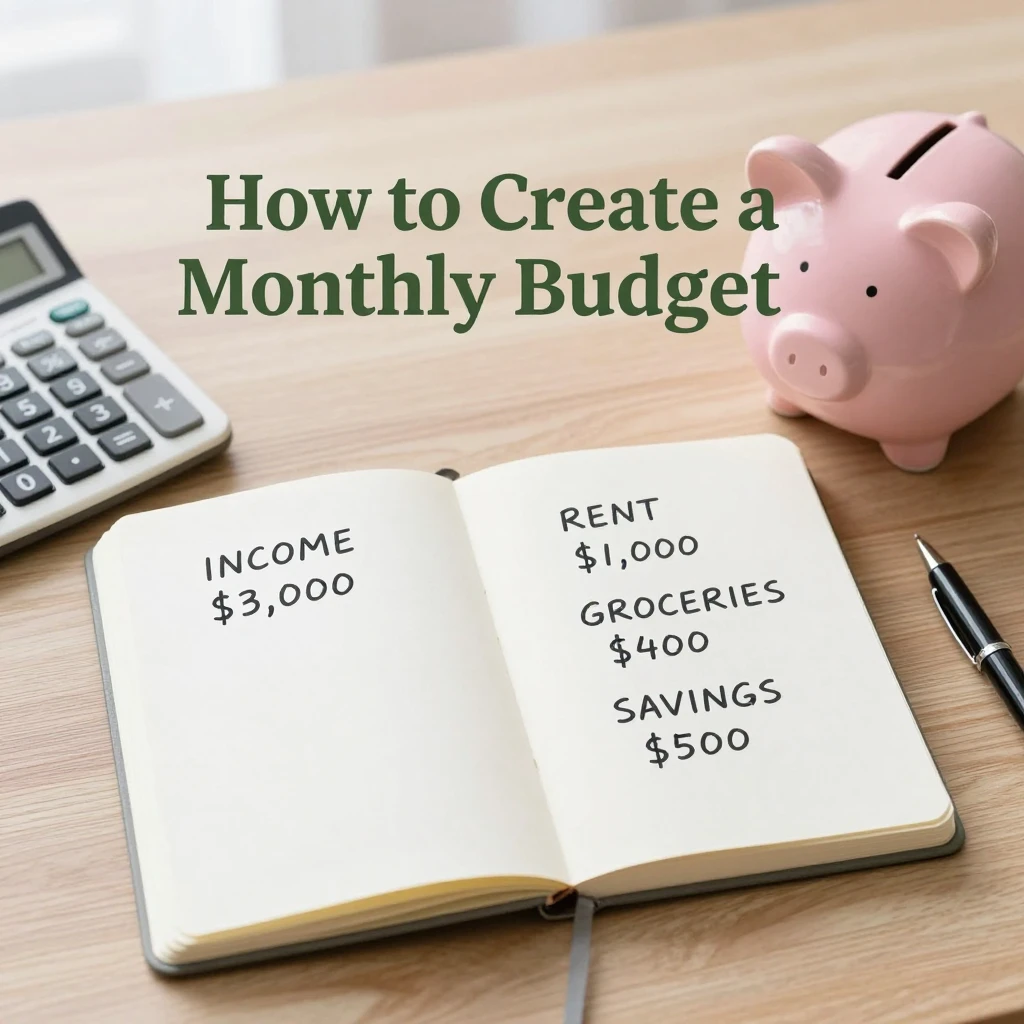
How to Create a Monthly Budget
Introduction
Money management is one of the most important life skills, yet many people never learn how to do it properly. It’s not uncommon to earn a decent income and still feel like you’re constantly running out of money before the end of the month. The problem is rarely about how much you earn it’s usually about how you manage what you have.
A monthly budget gives you a clear plan for your money. Instead of guessing or reacting to expenses as they come, you take control and decide in advance how every dollar should be used. This simple shift can completely change your financial situation.
Many people assume budgeting is restrictive or complicated, but in reality, it does the opposite. A good budget gives you freedom. It allows you to spend without guilt, save with purpose, and avoid financial stress.
In this guide, you’ll learn step-by-step how to create a monthly budget that is practical, realistic, and easy to follow. Whether you’re a beginner or someone who has struggled with budgeting before, this approach will help you build a system that actually works.
What is a Monthly Budget?

A monthly budget is a plan that outlines how much money you earn and how you intend to spend it over a specific period. It helps you divide your income into different categories such as living expenses, savings, and personal spending.
The purpose of a budget is not to limit you—it’s to give your money direction. Without a plan, money tends to disappear into small, unnoticed expenses. With a budget, every dollar has a purpose.
Think of it as a roadmap for your finances. It tells you where you are, where you’re going, and how to get there.
Why Budgeting is Important

Budgeting is essential because it creates awareness. When you know exactly how much you earn and where it goes, you gain control over your financial life.
Here are some key benefits of budgeting:
- Prevents Overspending: You’re less likely to spend money impulsively when you have clear limits.
- Builds Savings: A budget ensures that saving is not an afterthought but a priority.
- Reduces Stress: Financial uncertainty is one of the biggest sources of stress. A budget provides clarity and confidence.
- Helps You Reach Goals: Whether it’s buying something important or building long-term security, budgeting helps you get there faster.
- Improves Decision Making: You make smarter choices because you understand your financial situation.
Without a budget, even a high income can lead to financial problems. With a budget, even a modest income can be managed effectively.
Step 1: Calculate Your Monthly Income

The first step in creating a budget is understanding exactly how much money you have coming in.
This includes all sources of income, such as:
- Salary or wages
- Freelance or side work
- Business income
- Any other regular earnings
It’s important to use your net income, which is the amount you actually receive after taxes and deductions. This is the money you can realistically spend.
If your income varies from month to month, calculate an average based on the last few months. You can also use the lowest earning month as a safe baseline to avoid overestimating.
Being accurate at this stage is crucial because your entire budget depends on it.
Step 2: Track Your Expenses

Once you know your income, the next step is to understand where your money is going.
This is where many people are surprised. Small daily expenses—like snacks, subscriptions, or quick purchases—add up quickly over time.
Track every expense for at least one month. Write down everything, no matter how small.
Categories to consider:
- Fixed Expenses: Rent, utilities, subscriptions, loan payments
- Variable Expenses: Groceries, fuel, transportation
- Lifestyle Spending: Entertainment, shopping, dining out
Tracking gives you a clear picture of your spending habits. It helps you identify patterns, unnecessary expenses, and areas where you can improve.
Accuracy is more important than perfection. The goal is to understand your behavior, not judge it.
Step 3: Choose a Budgeting Method

A budget should match your lifestyle, not fight against it. That’s why it’s important to choose a method that feels natural and sustainable.
Percentage-Based Budget
This method divides your income into broad categories like needs, wants, and savings. It’s simple and flexible, making it ideal for beginners.
Zero-Based Budget
In this approach, every dollar is assigned a specific purpose. Your income minus expenses equals zero, meaning nothing is left unplanned. This method provides maximum control.
Cash Envelope Method
This involves using physical cash for certain categories. Once the cash is gone, you stop spending. It’s a powerful way to control overspending.
You don’t need to follow any method perfectly. You can even combine elements from different approaches. What matters most is consistency.
Step 4: Set Clear Financial Goals

A budget without goals lacks direction. Goals give your budget meaning and motivation.
Short-Term Goals
- Saving for something specific
- Paying off small debts
- Building initial savings
Long-Term Goals
- Financial independence
- Starting a business
- Buying a home
- Retirement planning
When you have clear goals, it becomes easier to make better financial decisions. You start prioritizing what truly matters and avoid unnecessary spending.
Write your goals down and keep them visible. This will remind you why you started.
Step 5: Allocate Your Money

Now that you understand your income, expenses, and goals, it’s time to assign your money.
Start with essential expenses such as housing, food, and utilities. Then allocate money for savings and finally for lifestyle spending.
A simple approach is:
- Cover necessities first
- Pay yourself (savings) second
- Spend on wants last
If your expenses exceed your income, adjustments are necessary. This may involve reducing certain categories or finding ways to increase income.
The key is balance. Your budget should be realistic and sustainable.
Step 6: Cut Unnecessary Expenses

Cutting expenses doesn’t mean sacrificing everything you enjoy. It’s about being intentional with your money.
Look for areas where you might be overspending:
- Subscriptions you no longer use
- Frequent impulse purchases
- Eating out too often
- Paying for convenience instead of planning
Even small reductions can make a big difference over time. The money you save can be redirected toward your goals.
Instead of asking, “What should I remove?” ask, “What adds real value to my life?”
Step 7: Build an Emergency Fund

Unexpected expenses are a part of life. Without a financial cushion, even a small emergency can disrupt your entire budget.
An emergency fund acts as a safety net. It protects you from relying on debt when something goes wrong.
Start small and build gradually. Focus on creating a reserve that can cover essential expenses for a few months.
This fund provides peace of mind and financial stability, allowing you to handle unexpected situations with confidence.
Step 8: Use Simple Tools

Budgeting doesn’t require complicated systems. The simpler your process, the more likely you are to stick with it.
You can use:
- A notebook for manual tracking
- A spreadsheet for organized planning
- A budgeting app for automation
Choose a method that fits your lifestyle. The best tool is the one you will use consistently.
Step 9: Review and Adjust Regularly

A budget is not a one-time task—it’s an ongoing process.
At the end of each month, review your budget:
- Where did you overspend?
- Which categories were accurate?
- What needs adjustment?
Life changes, and your budget should adapt accordingly. Regular reviews help you stay on track and continuously improve your financial habits.
Common Budgeting Mistakes to Avoid

Even with good intentions, mistakes can happen. Being aware of them can help you avoid setbacks.
- Not tracking small expenses
- Setting unrealistic expectations
- Ignoring irregular or seasonal costs
- Forgetting to update the budget
- Giving up after one bad month
Remember, budgeting is a learning process. Mistakes are part of the journey.
Tips to Stay Consistent
Staying consistent is the hardest part of budgeting. Here are some practical tips:
- Keep your budget simple and easy to follow
- Track your spending regularly
- Be honest about your habits
- Allow room for flexibility
- Celebrate small progress
Consistency builds discipline, and discipline leads to results.
Sample Monthly Budget
| Category | Amount |
|---|---|
| Income | $2000 |
| Rent | $600 |
| Groceries | $300 |
| Transport | $200 |
| Bills | $150 |
| Savings | $400 |
| Entertainment | $200 |
| Other | $150 |
This is just an example. Your budget should reflect your own lifestyle and priorities.
Conclusion
Creating a monthly budget is one of the most powerful steps you can take toward financial control and stability. It transforms the way you think about money—from something that slips away to something you actively manage and grow.
The process doesn’t have to be perfect. What matters is getting started. Even a simple budget can make a huge difference in how you handle your finances. Over time, as you refine your approach, budgeting becomes easier and more natural.
Remember that a budget is not about restriction—it’s about intention. It allows you to spend on what truly matters while avoiding waste and unnecessary stress. It gives you the confidence to make decisions and the clarity to move toward your goals.
Start with what you have, stay consistent, and keep improving. The habits you build today will shape your financial future in ways you may not even realize yet.
