
Money Habits That Make You Rich
Introduction
Money management is one of the most important life skills, yet many people never learn how to do it properly. It’s not uncommon to earn a decent income and still feel like you’re constantly running out of money before the end of the month. The problem is rarely about how much you earn it’s usually about how you manage what you have.
The difference between wealthy people and everyone else is not luck, inheritance, or winning the lottery. The real difference is habits. Rich people think about money differently. They act differently. And most importantly, they have built small, consistent habits that compound over time into massive wealth.
Many people assume that becoming rich requires a huge salary or a lucky break. But in reality, most millionaires built their wealth through simple daily habits — not through extraordinary circumstances. The good news? These habits are available to anyone who is willing to learn and practice them.
In this guide, you’ll learn step-by-step the money habits that make you rich. Whether you’re starting from zero or already have some savings, these habits will help you build lasting wealth.
What Are Money Habits?
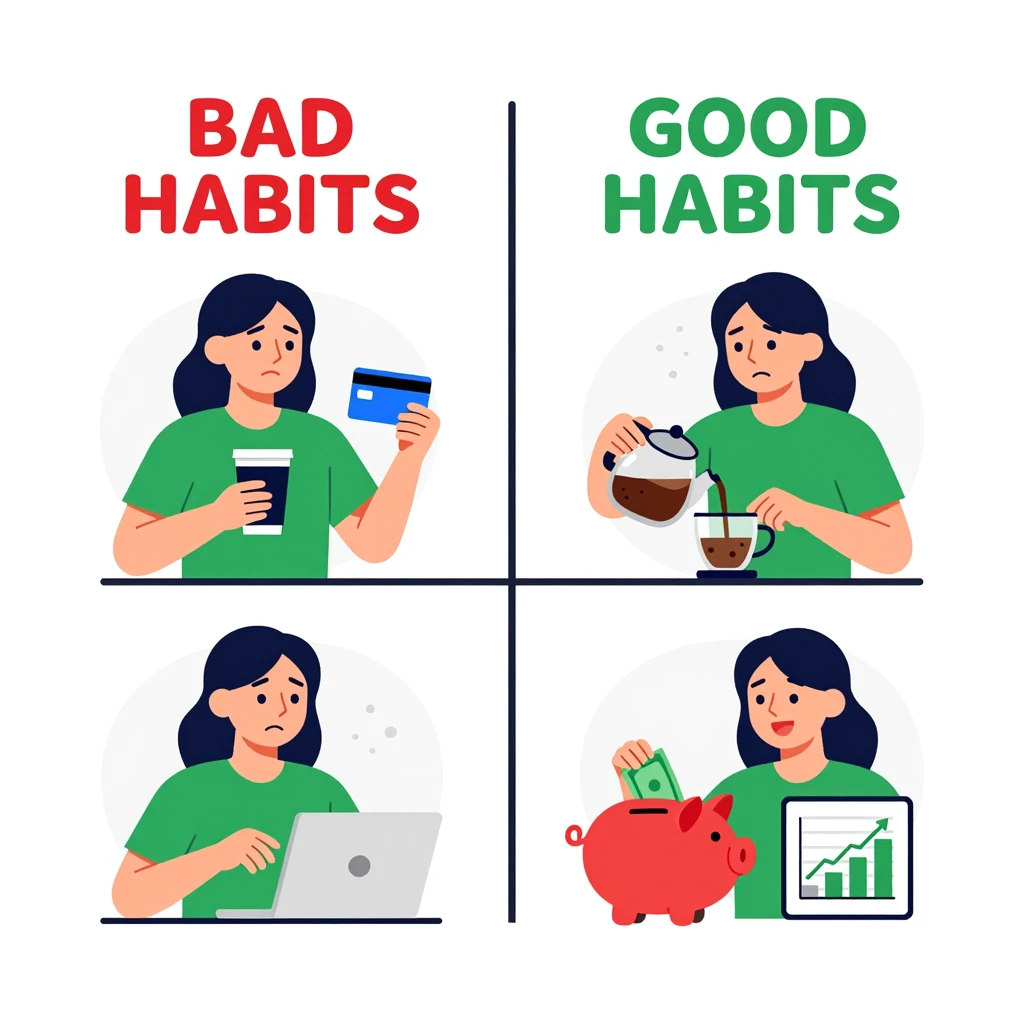
Money habits are the small, automatic behaviors you do with your money every day. They are the routines and patterns that shape your financial life, often without you even thinking about them.
| Bad Money Habits | Good Money Habits |
|---|---|
| Buying coffee out every day | Making coffee at home |
| Paying minimum on credit cards | Paying full balance every month |
| Saving whatever is left | Saving first, spending later |
| Impulse shopping online | Waiting 24 hours before buying |
| No budget or plan | Following a simple budget |
| Buying new cars with loans | Buying used cars with cash |
The purpose of building good money habits is not to deprive yourself it’s to give your money direction. Without good habits, money tends to disappear into small, unnoticed expenses. With good habits, every dollar has a purpose and works toward your future.
Think of money habits as the compound interest of behavior. Just as small amounts of money grow over time, small daily habits grow into massive results over years.
Why Money Habits Are Important

Money habits are essential because they create automatic wealth building. When your habits are good, you don’t have to struggle or use willpower every day. The right habits do the work for you.
Here are some key benefits of building strong money habits:
| Benefit | How It Helps |
|---|---|
| Builds wealth automatically | Good habits work even when you’re not thinking about money |
| Reduces financial stress | You stop worrying because you have a system that works |
| Creates financial freedom | You have choices because you’re not living paycheck to paycheck |
| Protects you from emergencies | Good savers handle surprises without debt |
| Helps you reach big goals | Consistent habits compound into life-changing results |
| Improves decision making | You make smarter choices automatically |
Without good money habits, even a high income can lead to financial problems. Athletes, lottery winners, and high-paid professionals often go broke because they never learned the right habits. With good habits, even a modest income can be managed effectively to build real wealth.
Step 1: Understand the Rich Mindset

The first step in building wealth is changing how you think about money.
| Poor Mindset | Rich Mindset |
|---|---|
| “I can’t afford it” | “How can I afford it?” |
| “Money is the root of evil” | “Money is a tool for freedom” |
| “I’ll save later” | “I save first, every time” |
| “I deserve to spend” | “I deserve to invest in my future” |
| “I work for money” | “Money works for me” |
| “Rich people are lucky” | “Rich people build good habits” |
💡 The truth: Your financial future is not determined by how much you earn. It’s determined by your daily habits and your mindset about money.
The rich mindset is not about being greedy or materialistic. It’s about understanding that money is a tool a tool that can buy freedom, security, and opportunities. When you shift your mindset, your habits naturally begin to change.
Step 2: Track Every Dollar You Spend
The second habit of wealthy people is knowing exactly where their money goes.
This is where many people are surprised. Small daily expenses like snacks, subscriptions, or quick online purchases add up quickly over time.
How to do it:
- Track every expense for at least 30 days
- Write down everything, no matter how small
- Use a notebook, spreadsheet, or free app
| Before Tracking | After Tracking |
|---|---|
| “Where did my money go?” | “I spent $200 on coffee this month” |
| Surprise at month end | Full control and awareness |
| Guilt about spending | Intentional choices |
| No idea where to cut | Clear areas to reduce |
Tracking gives you a clear picture of your spending habits. You can’t fix what you don’t measure.
Step 3: Pay Yourself First

The third and most important habit of wealthy people is paying yourself first.
What it means: Before you pay any bills or buy anything, put money into savings and investments.
The order of money:
PAYDAY ROUTINE:
━━━━━━━━━━━━━━━━━━━━━━━━━━━━━━━━━━━
Income: $3,000
━━━━━━━━━━━━━━━━━━━━━━━━━━━━━━━━━━━
1️⃣ PAY YOURSELF FIRST (20%):    $600  ← SAVINGS & INVESTMENTS
2️⃣ Pay essential bills:         $1,500
3️⃣ Spend the rest on lifestyle: $900
How to do it:
- Set up automatic transfer on payday
- Start with just 10% of your income
- Increase slowly to 15-20% over time
Why it works: When you pay yourself first, saving becomes a non-negotiable habit. You’re not saving what’s left you’re saving first, then spending what’s left.
Step 4: Live Below Your Means
Living below your means is the foundation of wealth building. It’s not about being cheap it’s about being intentional.
The formula:
text
Wealth = (What you earn) - (What you spend)

To build wealth, you must spend less than you earn.
How to do it:
- When you get a raise, save half of it
- Don’t upgrade your lifestyle with every pay increase
- Ask before every purchase: “Do I need this or just want it?”
| People Who Live AT Their Means | People Who Live BELOW Their Means |
|---|---|
| Spend everything they earn | Save 15-20% of income |
| Upgrade lifestyle with raises | Save raises instead |
| Always stressed about money | Peace and security |
| Can’t handle emergencies | Emergency fund in place |
Why rich people do it: The fastest way to build wealth is not earning more it’s spending less than you earn.
Step 5: Avoid Bad Debt
Not all debt is created equal. Wealthy people understand the difference.
| Bad Debt (Avoid) | Good Debt (Use Carefully) |
|---|---|
| Credit card debt (20%+ interest) | Mortgage (3-5% interest) |
| Car loans for new cars | Student loans (reasonable amount) |
| Buy now, pay later for wants | Business loans |
| Payday loans (NEVER use these) | Investment property loans |
The golden rule: If it doesn’t go up in value or make you money, don’t borrow money to buy it.
How to avoid bad debt:
- Pay credit card balance in full every month
- Save up to buy cars with cash
- Never use buy now, pay later for wants
- Build an emergency fund so you don’t need debt for surprises
Why rich people do it: Bad debt keeps you poor. The interest you pay to credit card companies is money that could be growing in your investments.
Step 6: Invest Before You Spend
Wealthy people don’t just save money they invest it. Saving keeps money safe. Investing makes money grow.
The order of money (detailed):
1. Emergency fund (3-6 months of expenses)
2. Pay off high-interest debt (credit cards)
3. INVEST (15-20% of income)
4. Save for short-term goals
5. Spend the rest
Where to invest:
| Investment | Best For | Risk Level |
|---|---|---|
| 401(k) or retirement account | Long-term wealth | Low to medium |
| Index funds (S&P 500) | Beginners, steady growth | Medium |
| Mutual funds | Diversification | Medium |
| Real estate | Passive income | Medium to high |
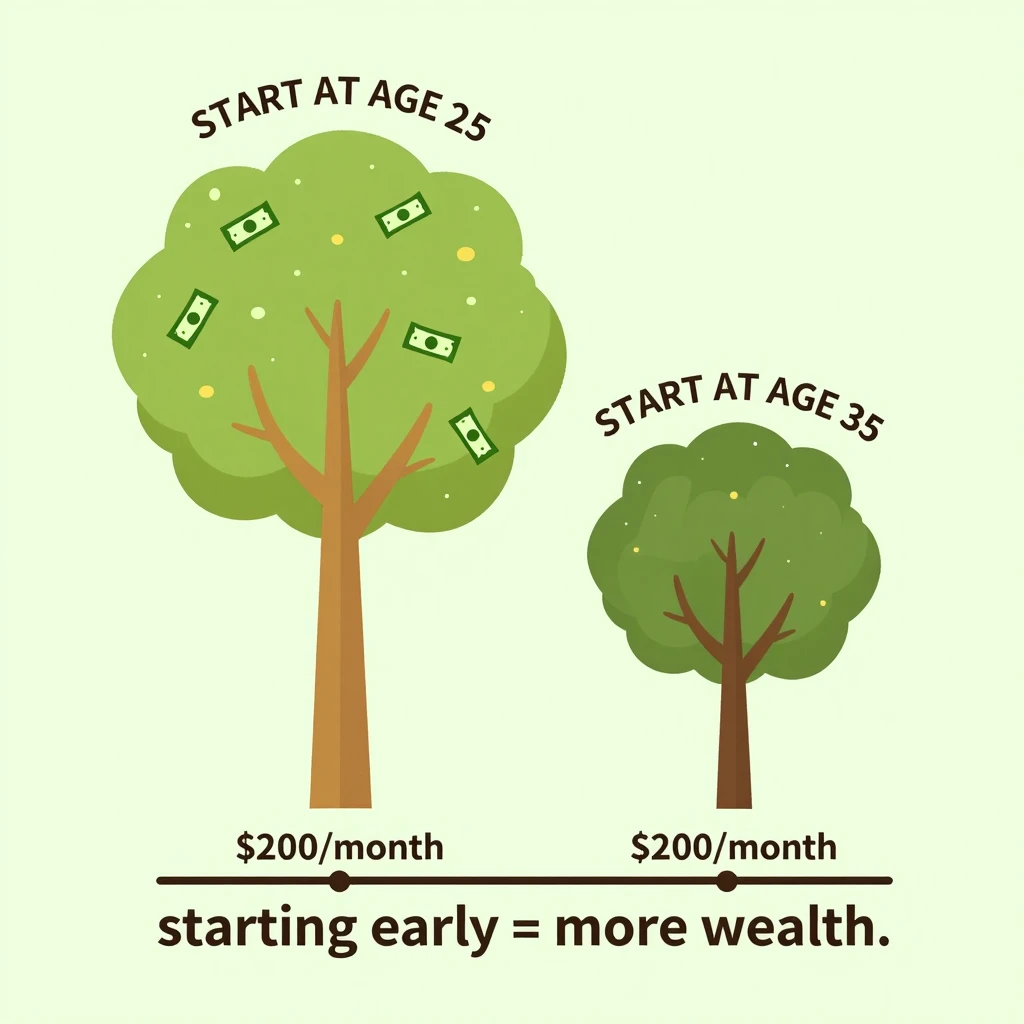
The magic of compound interest:
$200 per month invested at age 25
→ At age 65 = $500,000+

$200 per month invested at age 35
→ At age 65 = $200,000+

Starting early is the #1 wealth secret.
Step 7: Create Multiple Income Streams
Wealthy people rarely rely on just one paycheck. They build multiple streams of income.
Average millionaire has 7 income streams:
| # | Income Stream | Example |
|---|---|---|
| 1 | Job salary | Your 9-5 job |
| 2 | Side hustle | Freelancing, consulting |
| 3 | Investments | Stocks, index funds, dividends |
| 4 | Rental income | Property you own |
| 5 | Small business | Online store, coaching |
| 6 | Royalties | Books, courses, digital products |
| 7 | Passive income | Affiliate marketing, apps |
How to start:
- Pick ONE side hustle
- Spend 5-10 hours per week on it
- Grow it slowly
- Reinvest the income into more income streams
Why rich people do it: One income stream is risky. If you lose your job, you lose everything. Multiple streams = multiple safety nets.
Step 8: Automate Your Finances
The less you have to think about money, the better. Wealthy people automate their finances.
What to automate:
| What to Automate | How to Do It |
|---|---|
| Savings | Auto-transfer on payday to savings account |
| Investments | Auto-deposit to investment account |
| Bills | Auto-pay so you never pay late fees |
| Debt payments | Auto-extra payment to credit cards or loans |
Example automation setup:
Every payday (15th & 30th):
━━━━━━━━━━━━━━━━━━━━━━━━━━━━━━━━━━━
→ $500 to savings (automatic)
→ $300 to investment account (automatic)
→ $200 extra to credit card (automatic)
→ Rest stays in checking for bills and spending
Why rich people do it: Automation removes willpower. You don’t have to decide every month — it just happens.
Step 9: Wait 24 Hours Before Buying
Impulse spending is the #1 enemy of wealth building. Wealthy people have a simple rule: wait before you buy.
The 24-hour rule:
- See something you want (non-essential)
- Wait 24 hours
- Ask: “Do I still want this?”
- Ask: “Can I afford it with cash?”
- If yes to both, consider buying
The 30-day rule for big purchases:
- For items over $100, wait 30 days
- Most impulse urges disappear after 30 days
- If you still want it, save up and buy with cash
What happens: 80% of impulse urges disappear after 24 hours.
Why rich people do it: That $50 impulse purchase, if invested instead, could be $500 in 20 years.
Step 10: Negotiate Everything
Wealthy people understand that everything is negotiable.
What you can negotiate:
| Item | How to Negotiate |
|---|---|
| Your salary | Always ask for 10-20% more than offered |
| Rent | Ask for $50-100 off per month |
| Cable/internet | Call and ask for promotional rate |
| Gym membership | Ask for waived sign-up fees |
| Big purchases | Ask “Is this the best you can do?” |
Simple script to use:
“I really want this, but it’s a little over my budget. Is there any way you can do [lower price]?”
Why rich people do it: If you don’t ask, the answer is always no.
Step 11: Read About Money Every Day
Wealthy people are lifelong learners, especially about money.
How to do it:
- Spend 15-30 minutes daily learning about personal finance
- Read books, listen to podcasts, watch YouTube videos
Recommended resources:
| Type | Recommendation |
|---|---|
| Book | Rich Dad Poor Dad – Robert Kiyosaki |
| Book | The Millionaire Next Door – Thomas Stanley |
| Book | The Simple Path to Wealth – JL Collins |
| Podcast | The Dave Ramsey Show |
| YouTube | Graham Stephan |
Why rich people do it: Knowledge about money directly translates to more money.
Step 12: Set Clear Financial Goals
A habit without a goal lacks direction. Wealthy people write down exactly what they want to achieve.
Example goals:
| Goal Type | Example | Timeline |
|---|---|---|
| Short-term | Save $1,000 emergency fund | 3 months |
| Medium-term | Pay off $5,000 credit card debt | 12 months |
| Long-term | Save $50,000 for house down payment | 3 years |
| Retirement | Have $1 million saved | 20 years |
The goal formula:
I will [specific action] by [date] to achieve [goal].

Example: I will save $500 per month for 12 months
to build a $6,000 emergency fund.
Why rich people do it: A goal without a plan is just a wish.
Step 13: Surround Yourself With Smart Money People
Your social circle affects your financial habits more than you think.
The truth:
- If your friends spend lavishly, you will too
- If your friends save and invest, you’ll learn from them
How to do it:
- Join personal finance groups online
- Follow money-smart influencers
- Find an accountability partner
Why rich people do it: You are the average of the 5 people you spend the most time with.
Step 14: Review Your Money Weekly
Wealthy people check in with their money regularly.
Weekly money review (Sunday, 15 minutes):
WEEKLY MONEY CHECKLIST:
━━━━━━━━━━━━━━━━━━━━━━━━━━━━━━━━━━━
□ Check bank account balance
□ Review spending for the week
□ Pay any upcoming bills
□ Check progress on savings goal
□ Look at investments (briefly)
□ Plan spending for next week
Why rich people do it: Weekly check-ins prevent monthly surprises.
Step 15: Think Long-Term, Not Short-Term
The final habit of wealthy people is thinking long-term.
| Short-Term Thinking | Long-Term Thinking |
|---|---|
| “I want it now” | “I’ll wait and save” |
| Minimum credit card payment | Pay off full balance |
| Skip saving this month | Save every month |
| Buy new car with loan | Buy used car with cash |
| Get rich quick | Build wealth slowly |
Why rich people do it: Wealth is built slowly, over decades, not days. Time is your greatest wealth-building tool.
Common Mistakes to Avoid
| Mistake | Why It’s a Problem | The Fix |
|---|---|---|
| Trying all habits at once | Overwhelmed = quit | Start with 2-3 habits |
| Giving up after one bad day | Perfectionism kills progress | One bad day doesn’t matter |
| Not tracking progress | You don’t see improvement | Use a habit tracker |
| Comparing to others | Discouragement | Compare to your past self only |
| Expecting fast results | Wealth takes time | Think in years, not weeks |
Tips to Stay Consistent
| Tip | How to Do It |
|---|---|
| Keep it simple | Focus on 2-3 habits at a time |
| Track your habits | Use a simple checklist |
| Be honest about struggles | Adjust, don’t quit |
| Allow flexibility | Perfection is not required |
| Celebrate small progress | Every small win matters |
Sample Daily Money Habits Tracker
text
╔══════════════════════════════════════════════════════════╗
║           DAILY MONEY HABITS TRACKER                      ║
║           Month: __________                               ║
╠══════════════════════════════════════════════════════════╣
║ Habit                           M  T  W  T  F  S  S       ║
╠══════════════════════════════════════════════════════════╣
║ 1. Tracked all spending         ☐  ☐  ☐  ☐  ☐  ☐  ☐      ║
║ 2. Paid myself first (saved)    ☐  ☐  ☐  ☐  ☐  ☐  ☐      ║
║ 3. No impulse buys              ☐  ☐  ☐  ☐  ☐  ☐  ☐      ║
║ 4. Read about money (15 min)    ☐  ☐  ☐  ☐  ☐  ☐  ☐      ║
║ 5. Stayed under budget          ☐  ☐  ☐  ☐  ☐  ☐  ☐      ║
╚══════════════════════════════════════════════════════════╝
Conclusion
Creating wealth is not about luck, inheritance, or winning the lottery. It’s about building small, consistent money habits that compound over time.
The habits in this guide are simple, but they are not always easy. They require consistency, patience, and a willingness to think differently about money. But the good news is that anyone can learn them. Anyone can practice them. Anyone can become wealthy by following them.
Remember these key points:
- Start small — pick 2-3 habits to focus on first
- Be consistent — small daily actions matter more than occasional big efforts
- Think long-term — wealth is built over years and decades
- Automate what you can — remove the need for willpower
- Never stop learning — knowledge about money directly translates to more money
The best time to start building these habits was 10 years ago. The second best time is today.
Pick one habit from this guide. Start tomorrow morning. Don’t stop. Your future rich self will thank you.